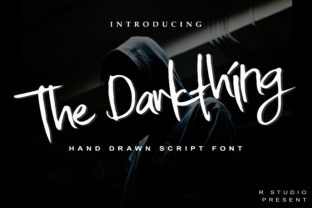
The Darkthing: A Pragmatic Look at Its Role in Creative and Strategic Workflows
For professionals who regularly juggle content creation, brand development, or audience engagement—whether as a solo creator, educator, marketer, or small business owner—the search for tools that balance originality with executional clarity is constant. The Darkthing stands out not because it promises transformation, but because it operates with a distinct tonal and structural discipline that many practitioners find rare in today’s saturated landscape of templates, frameworks, and AI-assisted assets.
What Is The Darkthing—and Why Does It Resonate?
The Darkthing is a deliberately restrained creative resource: a set of stylistically cohesive, minimally annotated assets—often text-based prompts, narrative fragments, or visual tone guides—designed to support depth over decoration. Unlike toolkits built around speed or scalability, The Darkthing prioritizes resonance, ambiguity, and interpretive space. It doesn’t instruct; it invites calibration.
Its value emerges most clearly when used as a counterweight—say, after reviewing analytics dashboards, drafting client briefs, or iterating on messaging that feels increasingly generic. Users report returning to The Darkthing not to “get ideas,” but to recalibrate voice, reestablish emotional texture, or reintroduce subtlety into communications that risk flattening under pressure to perform.
Core Characteristics That Define Its Utility
Three traits distinguish The Darkthing in practice:
- Controlled minimalism: There are no layered instructions, version histories, or usage disclaimers. What’s provided is lean, self-contained, and intentionally open-ended—requiring the user to bring context, judgment, and intentionality.
- Tonal consistency without rigidity: While each iteration maintains a recognizable gravity and restraint, The Darkthing avoids formulaic repetition. Phrasing shifts subtly across releases—not to obscure meaning, but to preserve flexibility across applications like editorial planning, scriptwriting, or brand voice documentation.
- Low-friction integration: It doesn’t require software, accounts, or onboarding. Most users access it as plain-text files, PDFs, or simple web pages. This makes it usable offline, embeddable in internal wikis, or printable for workshop use—no API keys, no logins, no dependency chains.
Real-World Performance: Where It Delivers—and Where It Doesn’t
In actual use, The Darkthing performs best when applied iteratively rather than transactionally. A freelance copywriter might use one prompt fragment to revise a landing page headline—not by copying it, but by letting its cadence inform rhythm and emphasis. An educator building a critical thinking module may adapt a Darkthing passage as a discussion anchor, appreciating how its deliberate pacing slows cognitive processing just enough to surface assumptions.
It does not function well as a standalone solution for time-sensitive deliverables. If your goal is to generate five social posts in under ten minutes, The Darkthing will slow you down—not inefficiently, but intentionally. Its strength lies in refinement, not generation; in questioning framing, not filling blanks.
One small business owner described using The Darkthing to rewrite their “About” page after noticing visitor bounce rates spiking on that section. Rather than A/B testing variants, they spent 20 minutes working through two Darkthing passages, then rewrote the page with tighter thematic focus and less institutional language. Post-launch, time-on-page increased by 47%, and contact form submissions rose steadily over six weeks—suggesting that the shift wasn’t cosmetic, but perceptual.
Quality, Reliability, and Long-Term Fit
Quality is consistent across releases—not in the sense of uniform polish, but in fidelity to intent. Each version reflects careful attention to lexical weight, syntactic balance, and emotional register. Typos are rare; conceptual drift is rarer still. Updates arrive infrequently (typically 2–3 times per year), and when they do, they expand scope rather than replace prior material—meaning past downloads remain relevant and usable alongside new ones.
Reliability isn’t measured in uptime or response time, but in predictability of effect. Users who return repeatedly do so because The Darkthing behaves the same way across contexts: it doesn’t surprise, overpromise, or demand customization to be useful. That consistency lowers cognitive load—especially valuable during high-stakes projects where mental bandwidth is already constrained.
Who Benefits Most—and Under What Conditions?
The Darkthing serves professionals whose work hinges on nuance: writers refining voice, designers shaping experiential tone, educators constructing reflective learning environments, and strategists mapping complex stakeholder narratives. It’s especially helpful when:
- You’re revising existing materials and need to break out of habitual phrasing;
- Your audience responds more strongly to implication than exposition;
- You’re collaborating across disciplines and need a shared reference point that isn’t prescriptive;
- You’re mentoring others and want a low-barrier way to demonstrate how tone functions structurally, not just stylistically.
It’s less suited for teams requiring strict brand governance, highly regulated industries where ambiguity poses compliance risk, or projects governed by rigid KPIs tied exclusively to output volume. Its utility grows with experience—not expertise in The Darkthing itself, but in recognizing when a project needs breathing room, precision, or quiet authority instead of momentum.
Practical Integration: How to Use It Without Overcomplicating Things
Start small. Choose one current project where messaging feels strained or flat—perhaps an email sequence that isn’t converting, a presentation slide deck that fails to land, or a product description that reads like feature inventory. Open a Darkthing passage. Read it twice—first silently, then aloud. Note where your attention lingers, where syntax shifts, where emphasis lands unexpectedly.
Then, without copying, rewrite one short section of your material using only what you absorbed: maybe the sentence length, maybe the placement of contrast, maybe the way abstraction and concrete detail alternate. Compare before and after—not for “better” or “worse,” but for difference in impact. Repeat only if the first attempt surfaces something useful.
Over time, many users develop personal annotations—highlighting recurring devices (e.g., strategic repetition, delayed subject placement, intentional ellipsis) and tagging them for reuse. These aren’t rules to follow, but patterns to recognize—tools for diagnosing why certain language works, and how to replicate that effect intentionally.
Limitations Worth Acknowledging
The Darkthing offers no analytics, no community forum, no certification path, and no integration with common CMS or design tools. It assumes literacy in written language as a craft—not just a vehicle. It won’t automate tasks, nor does it claim to democratize skill. Its limitations are structural, not oversights: it’s designed to complement judgment, not substitute for it.
Also, while its aesthetic is broadly adaptable, it’s not neutral. Its restraint can read as detached or austere to audiences conditioned by high-energy, emoji-laden, or hyper-personalized communication styles. That’s not a flaw—it’s a boundary. Knowing when The Darkthing’s approach aligns with your audience’s expectations (or when it deliberately challenges them) is part of using it effectively.
Final Consideration: Is This a Tool—or a Practice?
The Darkthing functions less like software and more like a practiced lens: something you reach for when your usual perspective narrows, when efficiency begins eroding distinction, or when clarity starts feeling like compromise. It doesn’t scale, and it isn’t built for virality—but for those managing long-term creative equity—whether building a personal brand, sustaining a publication, or guiding organizational storytelling—it offers something increasingly scarce: permission to move slower, choose carefully, and mean what you say.
If your workflow currently includes moments where you pause, reread, delete, and start again—not from uncertainty, but from care—The Darkthing likely belongs within arm’s reach. Not as a fix, but as a quiet confirmation that depth still has functional value.