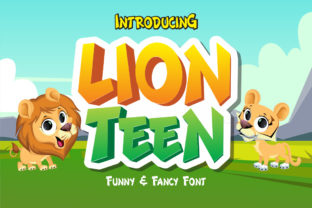
Lion Teen: A Practical Resource for Modern Content Creators and Educators
Lion Teen is a curated digital asset library designed specifically for creators, educators, and communicators who work with adolescent audiences—whether in publishing, curriculum development, marketing, or community programming. Unlike generic stock platforms or broad educational repositories, Lion Teen focuses on authentic, age-appropriate visual and textual material grounded in developmental awareness and cultural relevance. It includes illustrated characters, scene-based vector assets, customizable templates, and narrative prompts—all created with input from youth development specialists and tested across diverse classroom and digital contexts.
What Sets Lion Teen Apart from Generic Youth-Oriented Assets
Most resources labeled “teen-friendly” default to either oversimplified cartoon aesthetics or clinical, textbook-style illustrations that lack emotional resonance. Lion Teen avoids both extremes. Its character designs reflect realistic physical diversity—not just skin tone, but body types, mobility aids, neurodivergent expression (e.g., stimming cues, sensory-friendly clothing), and subtle cultural markers like headwraps, religious attire, or regional fashion cues. These aren’t tokenized details; they’re integrated into pose libraries, interaction sets, and background scenes so users can build consistent, respectful narratives without manual editing.
The library also includes contextual integrity: a “school hallway” scene features lockers with visible student artwork, multilingual bulletin boards, and varied footwear—not just generic backpacks and sneakers. A “virtual learning” template set shows students using different devices (laptops, tablets, shared desktops), with visible accessibility tools like screen readers or captioning windows. This level of environmental fidelity supports creators aiming for credibility with teen audiences—and with the adults who guide them.
Usability and Workflow Integration
Lion Teen delivers assets in layered SVG and high-resolution PNG formats, with clearly named files and intuitive folder structure (e.g., /Characters/Expressions/Neutral_Calm, /Scenes/School/Cafeteria_Day). No proprietary software is required. Designers using Figma, Adobe Illustrator, or Affinity Designer report smooth import and editing—especially because stroke weights, color palettes, and typography are standardized across the library. The palette itself is intentionally restrained: 12 core colors with accessible contrast ratios (AA+ compliant), plus two neutral grayscale sets for print-safe use.
For educators and non-designers, Lion Teen offers ready-to-use Google Slides and Canva templates—each pre-formatted with editable text boxes, alt-text placeholders, and speaker notes prompting inclusive facilitation language. One high school media teacher used the “Debate Prep” slide deck to scaffold argument construction with her 9th-grade students, adapting the visual cues to match her district’s SEL framework. She noted that students engaged more readily with the characters’ expressive range than with clipart alternatives—particularly when discussing nuanced topics like peer pressure or digital consent.
Consistency Without Rigidity
A common pain point with themed asset libraries is stylistic inflexibility—either everything looks identical (limiting creative voice) or inconsistencies undermine cohesion (e.g., mismatched line weights, clashing proportions). Lion Teen balances this by offering three distinct but interoperable illustration styles: Line & Wash (for print handouts), Flat Vector (for digital interfaces), and Sketch-Render (for whiteboard-style presentations). All share the same underlying character grid, perspective rules, and gesture vocabulary—so a “Line & Wash” student character fits naturally into a “Flat Vector” classroom scene without visual dissonance.
This interoperability extends to language. Each asset pack includes optional caption variants: one concise version for social posts, one expanded version for lesson plans, and one simplified version aligned with CEFR A2–B1 readability guidelines. That flexibility matters when repurposing content across platforms—say, turning a classroom poster into an Instagram carousel or a newsletter feature—without rewriting core messaging.
Real-World Performance and Limitations
In practice, Lion Teen performs best when used as a foundational layer—not a standalone solution. Its strength lies in accelerating early-stage ideation and ensuring baseline inclusivity, not replacing subject-matter expertise. For example, a nonprofit developing mental health resources for teens found Lion Teen’s “Emotion Mapping” character set invaluable for co-design workshops—but still brought in licensed counselors to vet clinical accuracy before finalizing content.
Limitations exist, and they’re worth naming transparently. Lion Teen does not include video, audio, or 3D assets. Its photo library is minimal by design—intentionally favoring illustration to avoid authenticity pitfalls common in stock photography (e.g., staged “diversity,” outdated tech, or culturally inaccurate settings). Also, while the library covers U.S. and Canadian educational contexts thoroughly, international adaptations—such as curriculum-aligned symbols for UK Key Stages or Australian ACARA standards—require light customization. Users outside North America should plan for minor localization effort.
Who Benefits Most—and When
Lion Teen serves professionals whose work hinges on trust, clarity, and relatability with adolescents. That includes:
- Educators building SEL curricula, project-based learning units, or inclusive classroom materials—especially those without dedicated design support;
- Content strategists and marketers at youth-serving organizations (libraries, museums, health clinics) creating campaigns that avoid condescension or stereotyping;
- Freelance designers and illustrators who regularly pitch to education or nonprofit clients and need vetted, reusable components to meet tight deadlines;
- Small publishers producing middle-grade and YA nonfiction titles where visual tone must balance approachability with intellectual rigor;
- Community program coordinators developing workshop handouts, consent forms, or orientation decks for teen volunteers or interns.
It’s less suited for projects requiring photorealism, highly stylized branding (e.g., anime or graffiti-inspired visuals), or rapid prototyping of interactive UI flows—though its assets can anchor static mockups effectively.
Practical Recommendations for Getting Started
Start small. Download the free “Core Character Set” (12 base figures + 4 expressions each) and test it in one low-stakes project: a classroom slide, a blog header, or a workshop handout. Pay attention to how easily you can adapt posture, props, or context—and whether the tone feels aligned with your audience’s expectations.
If working in a team, assign one person to manage Lion Teen’s file organization and naming conventions early on. Because the library uses semantic folder names rather than sequential IDs, consistency in usage multiplies its long-term value—especially when collaborating across departments or with external contractors.
Finally, pair Lion Teen with lived experience. Use its assets to spark conversations—not replace them. One university writing center integrated Lion Teen illustrations into peer tutor training, asking tutors to critique which images best conveyed “active listening” or “constructive feedback”—then revising the assets based on their insights. That iterative, human-centered approach is where Lion Teen delivers its strongest return: not as a finished product, but as a responsive, respectful starting point.
Lion Teen won’t solve every challenge in adolescent communication—but it removes several layers of guesswork, bias risk, and time-intensive iteration. For professionals who prioritize authenticity over convenience, and clarity over cliché, it functions as both a practical toolkit and a quiet commitment: to seeing teens not as a demographic, but as individuals whose visual representation matters as much as their words.