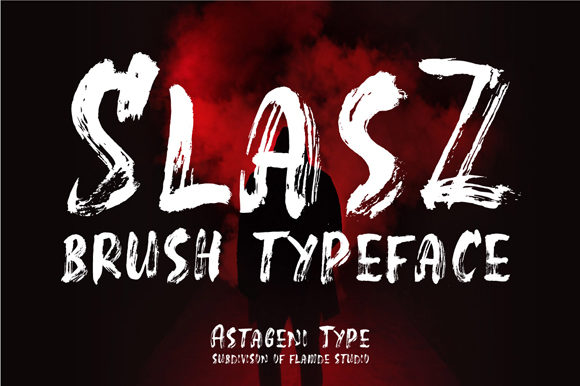
Slasz Brush: Precision Tools for Creative Work
When you’re sketching a product concept at 9 a.m., refining a presentation slide at 3 p.m., or annotating client feedback on a design mockup late in the evening, the right digital brush makes the difference between friction and flow. Slasz Brush isn’t another generic brush pack—it’s a thoughtfully curated set of vector-based, pressure-sensitive tools built for clarity, consistency, and control across creative workflows.
Why Brush Choice Matters More Than You Think
A brush is more than a visual effect—it’s an extension of your intent. A stiff, tapered line conveys authority in a technical diagram; a soft, textured stroke adds warmth to a hand-drawn illustration; a crisp, monoline pen helps educators highlight key ideas without visual noise. Slasz Brush delivers this nuance by prioritizing behavior over aesthetics: each brush responds predictably to speed, tilt, and pressure—so your focus stays on the idea, not the tool.
Unlike raster-based brushes that pixelate or blur when scaled, Slasz Brush uses vector geometry. That means whether you’re drawing a tiny icon at 16px or projecting a hand-sketched flowchart onto a conference wall, lines remain razor-sharp. This isn’t just convenient—it eliminates rework when assets move from screen to print, whiteboard to pitch deck, or prototype to production.
For Educators and Trainers
Teachers using interactive whiteboards or annotation tools during live sessions benefit from Slasz Brush’s consistent line weight and natural taper. One high-school science instructor reported cutting explanation time by 20% after switching—students grasped annotated diagrams faster because strokes didn’t waver or thicken unpredictably mid-explanation. The “Dry Ink” variant, with subtle texture and zero bleed, works especially well for handwritten labels on anatomy charts or historical timelines.
For Product Managers and UX Designers
When mapping user flows or sketching wireframes, ambiguity slows decisions. Slasz Brush includes purpose-built variants like “Wireframe Light” (a 1.2pt monoline with gentle caps) and “Connector Arrow” (with fixed-angle heads and adjustable tail taper). These aren’t decorative—they reduce cognitive load. A SaaS team testing early-stage prototypes found stakeholders asked fewer “What does this line mean?” questions, speeding up alignment by nearly one full review cycle.
For Freelancers and Small Business Owners
If you’re designing social assets, drafting proposals, or building brand mood boards—all in one app—consistency builds credibility. Slasz Brush’s color-synced variants let you switch between black, navy, charcoal, or brand-specific hex values without losing stroke integrity. No more manually adjusting opacity or rebuilding brushes per project. One freelance copywriter uses the “Margin Pen” style to hand-letter callouts directly into Canva presentations—clients consistently comment on the “human yet polished” feel.
How It Fits Into Your Existing Toolkit
Slasz Brush works inside Figma, Adobe Illustrator, Affinity Designer, and compatible vector editors—not as a standalone app, but as a precision layer within tools you already use. Installation takes under 30 seconds: download the .json or .abr file, import, and assign shortcuts. There’s no subscription, no cloud dependency, and no telemetry. What you get is a static, lightweight asset library—designed to stay out of your way.
This also means it complements rather than replaces other resources. If you rely on texture-heavy Photoshop brushes for painterly work, Slasz Brush won’t replicate that grain—but it will give you clean, scalable alternatives for labeling, diagramming, or layout refinement. Think of it as the reliable pen in your digital pencil case: not flashy, but always ready, always accurate.
Who Benefits Most—and When to Pause
Slasz Brush shines brightest for professionals who value repeatability, accessibility, and cross-format fidelity. That includes educators creating reusable lesson assets, marketers building branded templates, developers documenting architecture with hand-drawn clarity, and consultants sketching strategy frameworks for clients.
It’s less ideal if your workflow centers on expressive, organic mark-making—like fine-art digital painting or experimental typography where unpredictability is part of the goal. Similarly, users relying heavily on raster-based apps (e.g., Procreate or older versions of Photoshop without vector brush support) may find limited compatibility. Always check your software’s brush import specs first.
Also worth noting: Slasz Brush doesn’t include animation, blending modes, or dynamic scatter effects. Its strength lies in restraint. If you need animated ink trails or physics-based splatter, pair it with complementary tools—but keep Slasz Brush as your go-to for anything requiring legibility, structure, or professional polish.
Getting Started Without Overwhelm
You don’t need to use all 42 variants at once. Start with three:
- “Clarity Pen” — your default for notes, annotations, and quick sketches. Crisp, neutral, and universally readable.
- “Flow Connector” — optimized for arrows, loops, and directional cues in process maps or system diagrams.
- “Margin Marker” — slightly wider, with soft edges, perfect for highlighting sections in documents or framing key visuals.
Assign each to a keyboard shortcut (e.g., Cmd+1, Cmd+2, Cmd+3). Use them exclusively for one week—even when it feels unnatural. You’ll notice fewer micro-adjustments, faster export prep, and fewer requests for “cleaner versions” from collaborators.
A Note on Long-Term Value
Digital tools evolve fast. Plugins deprecate. Cloud services change pricing. Formats shift. Slasz Brush sidesteps that volatility. Because it’s delivered as open-standard files—not locked-in software—it remains usable years from now, even as apps update. One university design lab has used the same Slasz Brush set since 2021 across three major Figma updates and two OS upgrades—no migration, no retraining, no surprises.
That stability translates to real-time savings. A content strategist estimated she reclaimed 11 minutes weekly just by eliminating brush-search fatigue—no more cycling through 50 inconsistent options to find one that behaves. Over a year, that’s nearly 10 hours: time redirected toward writing, editing, or simply stepping away from the screen.
Final Thought: Precision Isn’t About Perfection
Slasz Brush won’t make your ideas smarter. But it can help them land more clearly—whether you’re explaining a budget to a nonprofit board, walking a developer through a new API flow, or helping students visualize abstract math concepts. Its value isn’t in what it adds, but in what it removes: hesitation, inconsistency, revision loops, and visual noise.
Try it where clarity matters most: next time you annotate a teammate’s Figma file, sketch a client’s service journey, or draft a workshop handout. Notice how much faster you move when the tool doesn’t ask you to compensate for its behavior. That’s not magic—that’s thoughtful design, applied quietly, where it counts.