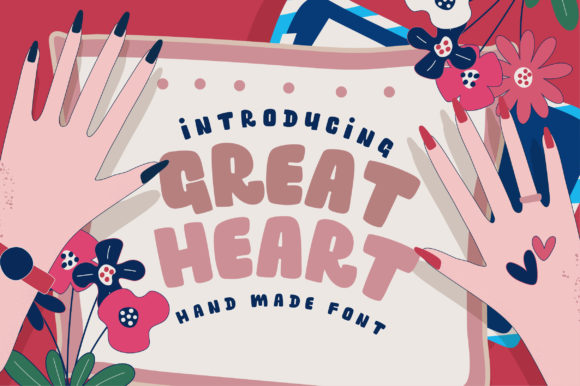
Great Heart: Creative Clarity, Rooted in Purpose
Great Heart isn’t a tool, trend, or template—it’s a mindset shift made visible. At its core, Great Heart describes work that balances emotional resonance with structural integrity: ideas that feel human *and* hold up under scrutiny, designs that breathe *and* function, messages that move people *and* make sense. It’s what happens when care meets craft, when intention guides execution without sacrificing authenticity.
This isn’t about grand gestures or perfection. It’s about choosing one meaningful connection over ten shallow ones—whether you’re writing an email sequence, sketching a logo, scripting a workshop, or launching a community initiative. Great Heart shows up when your audience feels seen, your logic holds, and your effort lands—not because it’s flashy, but because it’s well-rooted.
Why It Resonates Across Roles
Designers notice Great Heart in interfaces where hierarchy supports empathy—like a mental health app that uses calm spacing and clear action labels without oversimplifying complex emotions. Educators see it in lesson plans that pair rigorous scaffolding with room for student voice. Bloggers recognize it in posts that answer a real question *and* leave space for reflection—not just facts, but framing.
What makes Great Heart especially useful right now is its resistance to algorithmic drift. Platforms change. Trends fade. But work built on clarity, consistency, and genuine usefulness tends to age well—because it serves people first, not metrics.
Practical Starting Points
You don’t need permission to begin. Try these low-lift, high-impact entry points:
- Reframe one recurring task: Next time you draft a social post, ask: “What’s the single thing this person needs to understand or feel before they scroll past?” Then build around that—not hashtags, not hooks, but humanity-first utility.
- Edit for resonance, not just correctness: Review a recent piece of writing or design. Highlight every element that serves your core intent—and delete or simplify everything else. Great Heart thrives in restraint.
- Map your “why” to one tangible detail: If your goal is trust, where does that show up visually (e.g., consistent color use), verbally (e.g., plain-language explanations), or structurally (e.g., predictable navigation)? Anchor abstract values in concrete choices.
Adapting Great Heart by Role and Goal
For marketers: Great Heart transforms campaigns from attention-grabbing to attention-*keeping*. Instead of chasing virality, focus on coherence across touchpoints—a welcome email that echoes the tone of your website copy, a product demo video that mirrors the pacing of your sales call. Consistency isn’t repetition; it’s reliability made visible. Example: A small eco-brand used Great Heart principles to unify their packaging, Instagram captions, and customer service replies—all centered on quiet confidence, not urgency or guilt. Result? 32% higher repeat purchase rate in six months, not from louder messaging, but from deeper alignment.
For educators and trainers: Great Heart means designing learning experiences where structure enables, not constrains, engagement. That might mean using the same visual framework for all slide decks (consistent header style, uniform icon set, predictable layout zones) so cognitive load stays low—and mental energy goes to ideas, not decoding format. Or it could mean building reflection prompts directly into handouts instead of tacking them on at the end. The goal isn’t rigidity—it’s creating conditions where curiosity can unfold safely.
For freelancers and solopreneurs: Your portfolio isn’t just a gallery—it’s proof of process. Show how Great Heart shaped one project: a before/after of a client’s confusing landing page, annotated with notes like “Simplified navigation to reduce decision fatigue” or “Added real user quote to ground claims in experience.” This demonstrates judgment, not just output—and attracts clients who value substance over speed.
Keeping It Clear, Consistent, and Original
Clarity starts with constraints. Define one non-negotiable for each project: “This newsletter will never exceed 300 words,” or “Every illustration must include at least one intentional negative space shape.” Constraints focus creativity—they don’t limit it.
Consistency grows from systems, not willpower. Create reusable assets: a typography scale with defined use cases (e.g., “H2 = section headers only”), a color palette with accessibility-tested contrast ratios, or a voice chart listing three “always” words (“clear,” “direct,” “grounded”) and two “never” words (“leverage,” “synergy”). These aren’t rules to obey blindly—they’re guardrails that free you to experiment *within* a trusted foundation.
Originality emerges when you stop imitating outcomes and start honoring your own filters: What do you notice first in other people’s work? Where do you instinctively pause or lean in? That’s data—not noise. One illustrator began tracking moments of visual surprise in her feed (a bold crop, an unexpected texture overlay) and built a personal “surprise library” to reference—not copy—when developing new styles. Her work became more distinct, not less.
Realistic Ideas You Can Start Today
- The One-Page Alignment Check: Before launching any new content or design, write one sentence answering: “What does my audience gain here that they couldn’t get elsewhere—and why does that matter right now?” Keep it visible while you work.
- Great Heart Audit: Pick one existing asset (a landing page, a course outline, a brand guideline doc). Scan it for three things: Where is the purpose instantly clear? Where does the structure support understanding? Where does the tone invite connection without manipulation? Note gaps—and fix one.
- Micro-Consistency Swap: Identify one small, repeated element across your work (e.g., button styling, email subject line format, caption punctuation). Standardize it *exactly* for the next 30 days. Observe how that tiny shift affects perceived professionalism and ease of use.
Great Heart doesn’t require overhaul. It asks for attention—to your intent, your audience’s reality, and the quiet power of doing fewer things, better. It’s not about being flawless. It’s about being felt—and remembered—not for how much you said, but for how clearly you stood for something that mattered.
Start small. Choose one place where clarity and care intersect in your current work. Tend it. Refine it. Let it anchor the rest.